Is Your Bobcat Fork Lift Setup Ready for Stricter Noise Rules?
Blog
Forklift noise becomes a problem when a site sits close to housing or operates in...
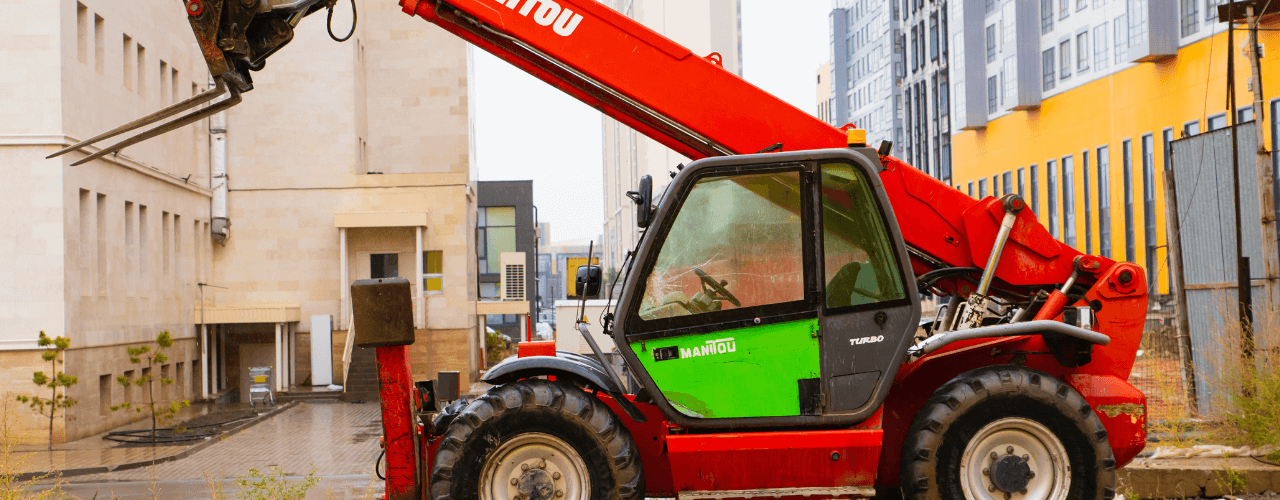
Small contractors often feel squeezed out of larger sites. Main contractors expect you to arrive with the right plant, the right paperwork, and the capacity to keep work moving even when things change. Most site teams decide within the first hour whether your kit is helping the job or slowing it down. Telehandler hire gives you a different route. It lets you show up on major projects with the same lifting capability as larger competitors, without tying up capital or carrying the risk of underused equipment.
On larger sites, the commercial pressure is higher, and the expectations are stricter. The real question for small contractors is how to match that standard without overextending the business.
Larger construction sites run on tight programs. Main contractors plan around fixed milestones and expect every subcontractor to arrive with reliable plant and proven safety standards. That creates pressure for smaller businesses.
You are often asked to prove that your equipment has current LOLER certification and a clear service history, and to commit to work on dates that may move as the program changes.
If you own your telehandler, you carry the cost of purchase, servicing and transport even when the machine is standing still. If the project pipeline slows, that machine still sits on your books.
Telehandler hire changes where that risk sits in your business. Instead of committing to a large capital purchase, you treat the machine as a project cost. That makes it easier for smaller firms to bid for and deliver larger-site work without feeling like every job is a gamble.
When a main contractor invites you to price work that needs a telehandler, you no longer have to ask whether you can afford to buy one. You price in telehandler hire for the period you need. The hire partner provides the machine, keeps it compliant, and supports it through the project. For a small business, that can be the difference between stepping up to a larger site or passing on the opportunity.
Larger sites rarely want to see tired, poorly documented plant arrive at the gate. They want clear proof that the machine has been inspected and is safe to use. With telehandler hire for small construction firms, that burden no longer sits entirely on your shoulders.
A specialist hire partner keeps machines up to date and holds LOLER and service records. When the telehandler arrives, you can present documentation that satisfies site teams and health and safety managers and move through induction quickly.
Buying a telehandler can look attractive when you compare the day rate of hire with finance repayments. That picture changes when you factor in weeks or months where the machine sits idle.
With short-term telehandler rental in the UK, smaller firms avoid that problem. You hire for the duration of the project. When the work is complete, the cost stops. You do not have to find new work just to justify the plant you already own.
Large contractors value flexibility. They want subcontractors who can respond when the program changes, bring in more lifting capacity when needed, and stand down equipment when it is not. They do not have much patience for delays caused by plant stuck on another job. Short-term telehandler hire helps smaller firms operate on larger sites in much the same way.
On a larger site, you may need a telehandler for specific phases rather than the entire project. You might only need lifting support for the frame or the external envelope. With short-term hire, you match the machine to those phases and hand it back once the lifting scope finishes, so plant costs do not bleed into quieter periods. You are not explaining to your accountant why a machine sat idle for three months.
Small contractors often juggle more than one site at a time. Moving your own telehandler between them eats time and money. With local telehandler hire – the kind people search for with phrases like “affordable telehandler hire near me” – the hire partner delivers and collects to your program. You do not have to own a transport solution or schedule extra drivers, which makes it easier to keep several projects moving at once.
Larger clients and principal contractors have stricter compliance expectations. They are under pressure from clients and regulators. You feel that pressure on site every day.
When you rely on telehandler hire, you rely on a fleet that is already set up for inspection. Current LOLER certificates and inspection records support your site induction and toolbox talks. You do not spend days chasing paperwork before the job starts, and you look organized when you arrive. You spend less time arguing at the gate and more time getting lifts done.
Service support matters when something goes wrong on site. Even well-maintained telehandlers develop faults. On a large site, you do not have the luxury of workarounds. With a hire partner behind you, service teams respond quickly and either fix faults or swap out the machine. That support reduces downtime and protects your reputation with the main contractor.
Whether you hire or buy will always depend on how your workload looks, but many small contractors find that hire gives them more control. For many, the main question is how to keep risk and cashflow manageable, not simply how to save money on telehandler hire.
Buying a telehandler ties up capital and brings ongoing finance payments, insurance and servicing. If work slows, those costs keep going. Most owners have a story about a machine that turned into an expensive yard ornament between jobs. If you outgrow the machine, you face the hassle of selling and replacing it.
With telehandler hire, you match cost to revenue. You bring plant into the business when a project needs it and treat it as a direct cost of that job, not as a fixed overhead that follows you into the next financial year. That is where the benefits of hiring vs buying telehandler become clear. You keep more room on your balance sheet for the things you actually need to own, protect cashflow, avoid the hit of depreciation, and let the hire partner carry more of the long-term risk.
If you work on varied jobs with gaps between projects, or your pipeline is still growing, that flexibility matters more than marginal savings on day rates.
Choosing to hire does not remove your responsibility to pick the right partner. On larger sites, your hire supplier becomes part of how you perform.
Smaller contractors should expect a hire partner to offer clear availability of suitable telehandlers for the types of work you do and hire options that reflect project length. Delivery and off-hire should be straightforward. Documentation should be kept up to date for site teams, and service support should be ready when you need it. A partner that delivers on these points makes it easier for your team to focus on the work itself rather than worrying about plant. If they fall short, it is your name the site remembers, not theirs.
If you’re pricing work on a larger site and don’t want to buy a telehandler just to stay competitive, telehandler hire is the cleaner route. You get reliable, compliant kit when you need it, without carrying the cost when you don’t.
If you want a clear plan for the lifting scope on your next project, speak with the Glosrose team. We’ll match a machine to your programme and help you keep the job moving without stretching your plant budget.


Not sure what you are looking for or need some advice for your requirements? Get in touch with us today and a member of our experienced team will be more than happy to help answer your questions.