When to Choose a Combilift C-Series vs an Aisle Master Articulated Truck
Blog
While both machines are manufactured by the same parent company in Ireland, they solve two...
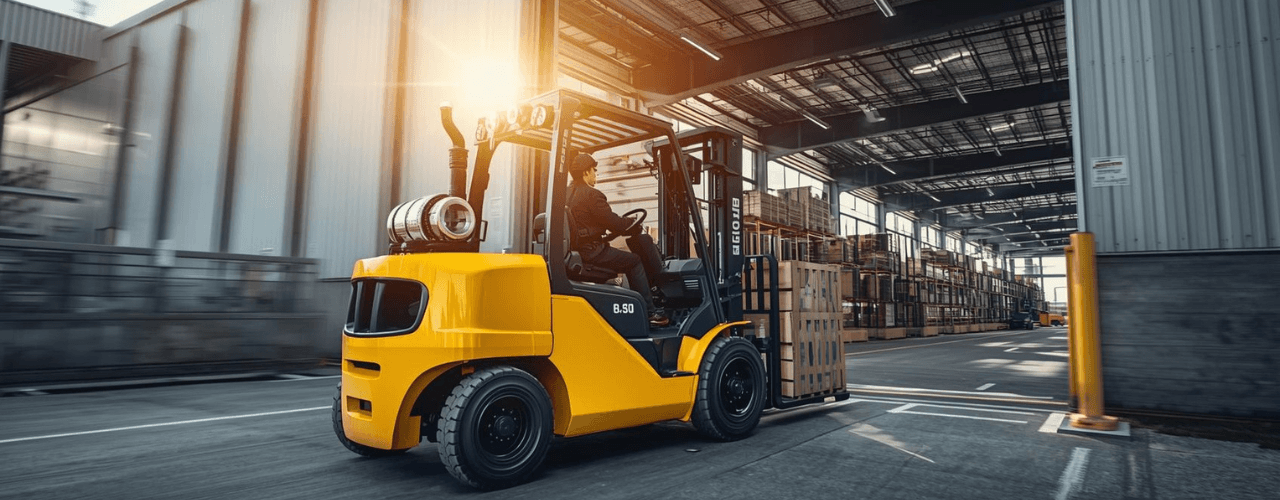
Material handling sites often expect a single counterbalance forklift to survive a saturated yard before immediately stacking in a narrow-aisle warehouse. Forcing a standard indoor machine into these hybrid roles is a recipe for mechanical failure. Usually, the wire looms corrode and hydraulic seals perish first. This leads to sudden fleet downtime and those expensive emergency callouts that gut your operational budget. A precise Workflow Audit keeps equipment running across every site zone without these predictable breaks.
As of February 2026, the “Jack-of-all-trades” approach faces heavy scrutiny from both regulators and insurance providers. Tightening UK HSE air quality standards and the industry-wide move toward electrification have widened the gap between basic warehouse models and true hybrid machines. If you are a fleet manager, your priority is uninterrupted throughput. That means preventing your counterbalance forklift fleet from “bricking” due to the sharp temperature shifts at the warehouse threshold.
In a heavy downpour, a standard indoor electric truck is a liability. You need to look at the Ingress Protection (IP) rating as the definitive metric for outdoor suitability. For these mixed-use applications, Glosrose specifies the CAT EP series. These units feature IPX4 or IP54 protection specifically for the drive and pump motors, setting the standard for a durable counterbalance forklift for combined indoor-outdoor use.
Industrial seals stop condensation from forming inside motor housings as the truck moves from a cold yard to a heated warehouse. Without this protection, moisture eventually clogs the sensitive electronics. Your operators then must deal with “phantom” sensor faults or a sudden, dangerous loss of steering assist. For a business, a sealed system is an insurance policy against the high humidity levels common across the UK; it ensures your fleet remains available during peak seasonal shifts rather than sitting in the workshop.
Is your current fleet experiencing intermittent sensor errors or “limp mode” after yard work? These symptoms often indicate moisture ingress within the electrical housing. To prevent total circuit board failure and protect your uptime, Glosrose provides technical fleet diagnostics to identify environmental vulnerabilities. Request a suitability check on your site.
The physical terrain of a loading yard is a major hurdle. Standard warehouse trucks typically arrive with Cushion tyres for tighter turning circles, but these offer zero traction on damp tarmac or gravel. A hybrid workflow requires Solid Pneumatic (Resilient) tyres. These provide the puncture protection and shock absorption required when the ground isn’t perfectly flat, which is a critical specification when browsing counterbalance forklift sales and hire options.
Tyre choice also dictates how much mast sway you’ll deal with during high-reach tasks. Vibrations from potholed yards loosen carriage bolts and put unnecessary stress on tilt cylinders. Modern “Outdoor-Ready” electrics, such as the EP Equipment lithium range, combine high-clearance axles with a wider wheelbase. By preventing the truck from bottoming out on gully drains, you protect the underside of the chassis and ensure the load remains stable during transit, directly reducing the risk of costly stock damage.
The regulatory landscape changed significantly at the beginning of 2026. As of January 19th, 2026, the Accrediting Bodies Association (ABA) updated workplace transport groupings. For fleet managers, this means competence can no longer be assumed across different machine types; for instance, a new M4 category now specifically covers pedestrian-operated multi-directional equipment.
Finding a legal justification for using diesel or LPG trucks indoors is getting harder. Even if you have high-quality extraction, the particulate matter from those engines eventually settles on your stock and racking. Switching to a high-performance electric counterbalance eliminates those cleanup costs. More importantly, it aids your business by removing the legal and financial liability associated with long-term emissions exposure in enclosed spaces. Investing in a performance electric counterbalance forklift effectively future proofs your site against evolving HSE inspections.
In busy loading bays, electric CAT trucks provide a safety upgrade because of the noise factor. Near-silent operation allows drivers and marshals to hear each other clearly. Safety alarms remain audible over the site noise instead of being drowned out by an engine roar, which reduces the likelihood of pedestrian-related accidents.
Diesel was once the default for the yard because people trusted the torque. In 2026, the math has flipped toward electric power.
Before you sign off on a new lease or purchase, use this checklist to ensure your counterbalance forklift fleet management strategy is sound:
At Glosrose, we audit workflows based on over 40 years of seeing what actually breaks on-site. A truck might look efficient on a specification sheet, but that doesn’t mean it can handle a damp morning in a heavy-duty yard. Technical theory rarely accounts for real-world grit.
With 2026 ABA standards now in full effect, lead times for high-spec, outdoor-ready electric units are tightening. If your current fleet is struggling with the move between the yard and the warehouse, the time to audit is now. Acting early ensures your counterbalance forklift specification fits your specific workflow rather than letting unplanned downtime dictate your replacement schedule.
Seeking counterbalance forklift sales or hire in the UK? Protect your throughput with a precise specification. Book a site survey with our experienced sales team today to verify your environmental protection needs and power infrastructure.

Not sure what you are looking for or need some advice for your requirements? Get in touch with us today and a member of our experienced team will be more than happy to help answer your questions.