Is Your Bobcat Fork Lift Setup Ready for Stricter Noise Rules?
Blog
Forklift noise becomes a problem when a site sits close to housing or operates in...
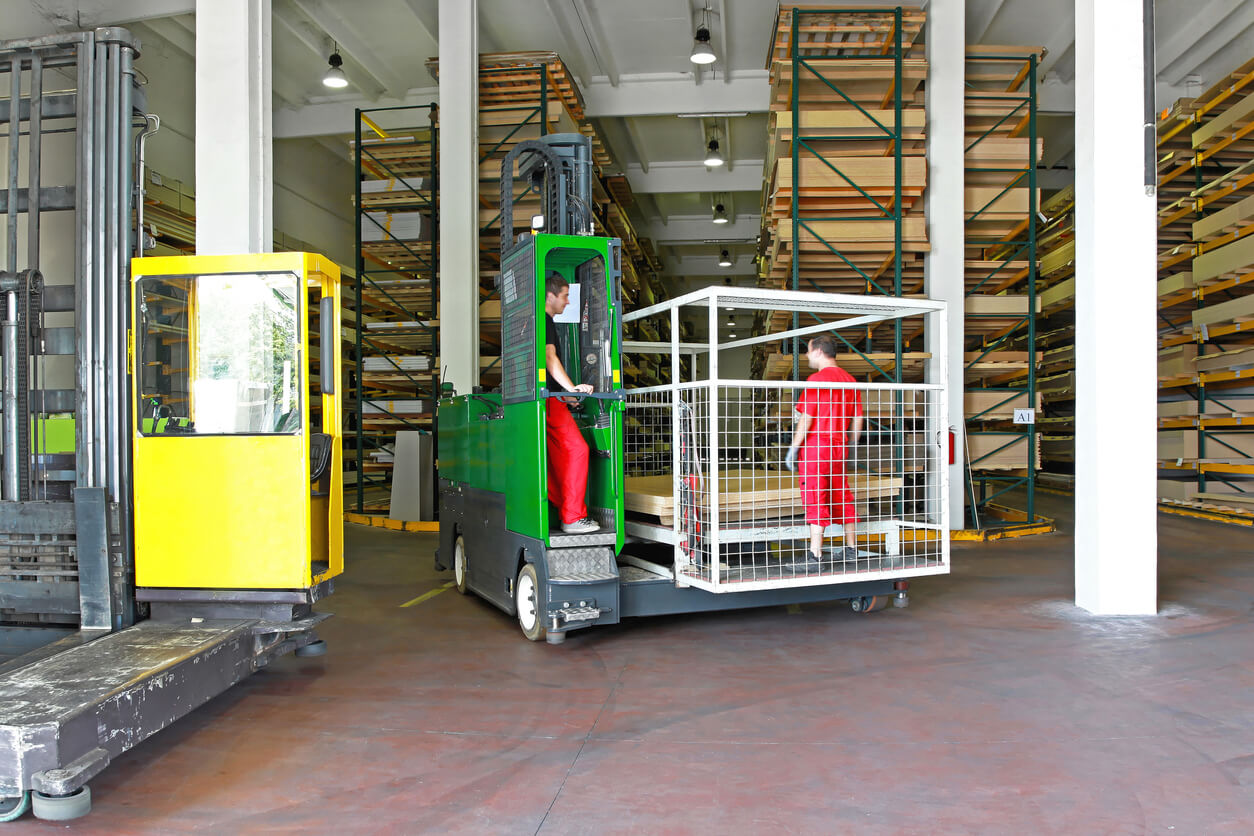
Space pressure and safety conflicts are common in warehouses. A CombiLift addresses both with multi‑directional travel and a compact chassis, cutting reversing risks and unlocking denser storage without major layout changes. Here’s how to deploy a CombiLift range, choose the right configuration, and integrate it with your existing equipment.
Typical pressure points include blind exits at goods‑in, congested cross‑aisle turns near packing, and oversize loads in timber, steel, or panel storage.
It travels sideways with the load facing forward, which cuts reversing and improves stability for long loads.
A CombiLift steers in multiple directions, so the truck can travel sideways with the load facing forward. This reduces reversing in narrow aisles and keeps the operator’s view clear. The platform, mast, and wheelbase are designed to stabilise long or awkward loads in tighter spaces than a conventional counterbalance can manage.
CombiLift forklift delivers fewer multi‑point turns, less damage to racking, and shorter travel paths. When loads move side‑on, you spend less time repositioning and more time stacking. For timber, steel, panel products, or mezzanine sections, a CombiLift lets you get work done where a standard truck would need extra clearance.
A CombiLift improves line of sight because the operator can sideload into position rather than reverse across crossings. It also reduces the number of manoeuvres per lift, which lowers the chance of contact incidents. On a site, that means fewer walk‑arounds and less waiting for a clear run.
Share your longest load, aisle width, and lift height and we’ll recommend a CombiLift format that fits. Contact us today!
To extend these gains to pedestrian‑heavy zones or small‑goods areas, consider a companion unit like the Combi‑CS Counterbalance Stacker for walk‑behind work, or an Aisle‑Master LPG where narrow aisle reach and high‑lift capability are key. Both pair well with a CombiLift fleet and maintain a consistent safety standard across tasks.
By travelling sideways and placing loads without wide swing arcs, a CombiLift allows racking to run closer together. Many sites reduce aisle width and reclaim otherwise lost bay space. That means higher storage density without adding square footage.
Quick wins include storing long loads such as beams or boards in fewer and better‑organised runs and reducing staging areas by placing stock closer to process points because trucks can approach side‑on.
Most teams feel the benefit at the end of the day: less back‑and‑forth to stage pallets.
To complement vertical picking or very tight locations, an Order Picker can handle case‑level tasks while the CombiLift forklift manages pallets and long loads. Where indoor air quality and energy cost matter, an AC Electric Machine gives clean operation on shifts alongside your CombiLift units.
Match the truck to load length and weight, lift height, aisle width, floor condition, and your power/shift pattern.
The correct CombiLift depends on your load profile and space. Start with load length and typical weight (longest item, average pallet, and any overhangs); lift heights and racking design (clear lift plus safety margin); aisle width and turning constraints (minimum clearances at pinch points); floor condition (surface type and gradients that affect stability); and power and shift pattern (charging or refuelling windows and run‑time expectations).
What you’ll get from Glosrose: a site‑specific recommendation on CombiLift format and capacity, advice on aisle targets and staging to unlock density safely, and a pairing plan with support kit (stacker, order picker, or VNA alternative) if needed.
For short hops in pedestrian zones, a walk‑behind Combi‑CS fits well; for higher lifts and articulated reach in narrow aisles, consider Aisle‑Master. Choose electric for indoor air quality and LPG where fast refuel support continuous shifts.
Lead outcomes first: cut reversing and blind exits by using side‑on travel where it helps; keep predictable speeds through marked crossings and bends; and preserve planned widths by removing stray pallets and packaging. Train operators on multi‑directional control with short, model‑specific refreshers so they use CombiLift features confidently. Run pre‑use checks on brakes and steering, mast and chain movement, forks and carriage, hydraulics, tyres, and safety devices, and log the hour‑meter and truck ID. These habits cut damage rates and help the CombiLift retain consistent performance across shifts.
Lead outcomes: less travel and fewer manoeuvres lower energy or fuel per pallet moved; denser storage can defer external storage or racking expansion; fewer touch points reduce racking and product damage; and clearer lines of sight with simpler approaches trim cycle times. Across busy weeks, these add up. Using a CombiLift for the right jobs helps protect programme dates and tightens unit costs.
Map your current aisle widths and longest load length, then identify three congested locations where side‑on placement helps immediately. Confirm floor condition and gradients, choose the power type and charging or refuelling plan, and schedule operator familiarisation on multi‑directional travel.
A short, well‑planned trial often shows the CombiLift advantage in week one.
Book a short consultation to review your layout, loads, and shift plan. We’ll recommend the right CombiLift format and the supporting equipment that keeps throughput high.
Explore the range: CombiLift range
Discuss your site: Contact Glosrose
Related equipment for specific tasks:
We help warehouses in Kent, Surrey, Sussex, and Greater London turn layout constraints into safe, efficient operations. From assessment to trials, operator training, and servicing, we make sure your CombiLift delivers the results your programme needs.
For professional advice or to arrange a site visit, contact our team today. We’ll help you plan, specify, and integrate the right solution for your warehouse.

Not sure what you are looking for or need some advice for your requirements? Get in touch with us today and a member of our experienced team will be more than happy to help answer your questions.