Could the Wrong Forklift Be Costing Your Warehouse More Than You Think?
Blog
Purchase price is an obvious place to start when comparing forklift sales options. But a...
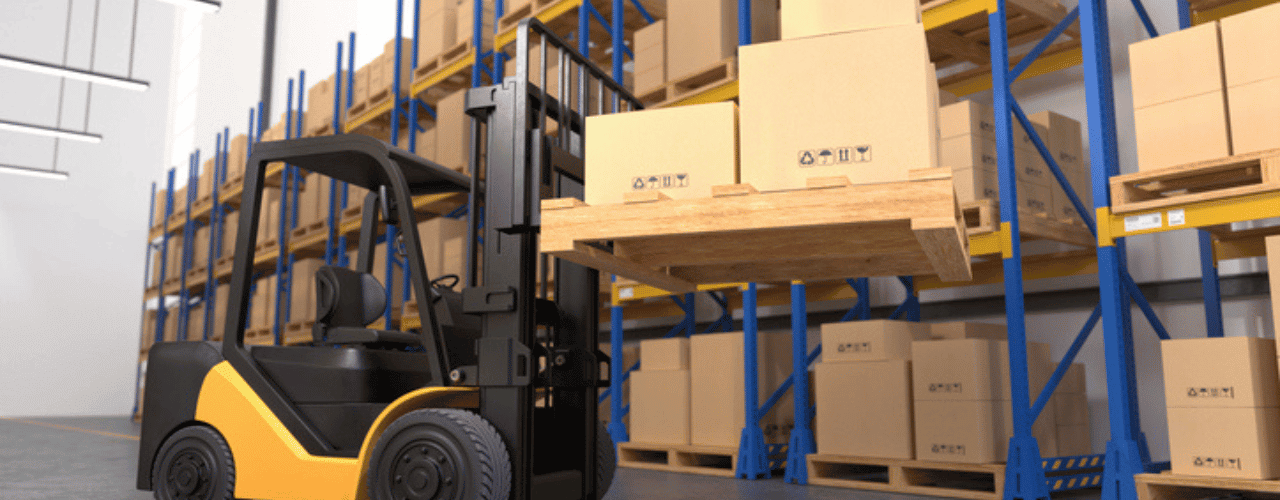
If a counterbalance forklift can enter a trailer or shipping container but operators cannot raise the pallet far enough once inside, maximum lift height may not be the problem. The restriction can be the way the mast extends within the available headroom.
For low-headroom loading, compare lowered mast height, available free lift, overhead guard height, required fork height and residual capacity against the actual clearance and pallet movement. That shows whether the truck can complete the lift, not simply whether it can enter the vehicle.
At Glosrose, a family-run materials handling business established in 1976, we use those operating requirements to compare suitable counterbalance forklift and mast configurations across multiple brands. We can then discuss purchase, short-term hire or contract hire where appropriate.
Free lift is how far the forks can rise before the mast needs additional headroom. Inside a trailer or container, a counterbalance forklift can have enough total lift on paper but still run out of usable fork movement beneath the roof.
If the truck clears the entrance but cannot raise the pallet far enough once inside, compare the available free lift with the fork movement required in the vehicle. If operators then have to swap trucks, rehandle pallets or pause loading, a clearance problem has become an operational problem.
On some forklift ranges, a container specification describes a truck configured for restricted-height work. It can combine a suitable lowered mast height, overhead guard height and free lift so the truck can enter a restricted space and still complete the required pallet movement.
The label alone does not prove suitability. Entrance height, internal headroom, load dimensions and required fork movement still need to be checked against the actual truck. We can compare those figures across multiple brands rather than relying on the label or maximum lift figure alone.
Start with the job, then compare the truck against it. The most useful checks link the operating restriction directly to the specification that answers it:
Two counterbalance forklifts can have the same nominal capacity and similar maximum lift heights but behave differently under restricted headroom. Comparing the figures above side by side is more useful than choosing on headline capacity or lift height. Glosrose can use this operating brief to rule out unsuitable configurations before you decide whether to buy, hire or change the existing specification.
Neither is automatically better. Compare the lowered mast height, available free lift, maximum fork height and residual capacity of the actual mast fitted to the counterbalance forklift. A triplex mast can combine high maximum lift with a relatively compact lowered height, so the number of mast stages alone does not determine suitability.
Potentially, but the mast has to suit both jobs. Container loading can favour low overall height and useful free lift, while higher racking may require greater maximum fork height and sufficient residual capacity at elevation.
If one counterbalance forklift needs to cover both duties, compare the available container headroom with the required fork height at the highest racking position, load weight and load centre. Good news is that, at Glosrose we can compare configurations that retain the loading clearance without giving up the lift capability needed elsewhere in the warehouse.
If the current forklift cannot complete the required pallet movement within the available headroom, the answer is not automatically a smaller truck. There are three practical routes to consider:
For regular, long-term loading duties, purchase or contract hire may be more suitable. If you are looking for advice, we can help by comparing these routes across multiple brands and around the frequency of the requirement.
Correct mast specification is only one part of trailer and container loading. The wider operating environment can also affect whether a counterbalance forklift is suitable:
These controls sit alongside equipment specification rather than replacing it. If you are reviewing wider access routes, floor conditions and clearances before hiring, our forklift hire site checks cover those points in more detail.
At Glosrose we can turn the operating brief into a practical shortlist across multiple brands. Rather than starting with one manufacturer or the highest lift figure, we can compare the truck and mast configuration around the work it actually needs to perform.
For longer-term planning, a site survey and load or route assessment can also help confirm how the proposed truck fits the wider operation.
If your current counterbalance forklift struggles in trailers or containers, or you are specifying equipment for a new loading operation, speak to our team. Share the load, required fork height, lowest clearance and wider duty, and we can compare suitable multi-brand options for purchase, short-term hire or contract hire, subject to availability.
No. Maximum lift height is the highest fork position the truck can achieve. Free lift is the amount the forks can rise before the mast extends above its lowered height.
Full free lift refers to a mast configuration that allows substantial fork movement while the mast remains at its lowered overall height. Once the available free lift has been used, further lifting causes the mast sections to extend upwards.
There is no single figure that suits every operation. The amount required depends on how far the forks need to rise inside the vehicle and how much headroom is available before the mast begins to extend.
Yes. The truck may clear the entrance but still lack enough usable fork movement to position the pallet before the mast needs to extend beyond the available headroom.
Not sure what you are looking for or need some advice for your requirements? Get in touch with us today and a member of our experienced team will be more than happy to help answer your questions.