What Should You Check Before Hiring a Forklift for a Busy Warehouse?
Blog
If your warehouse needs extra capacity, you do not need to work out the exact...
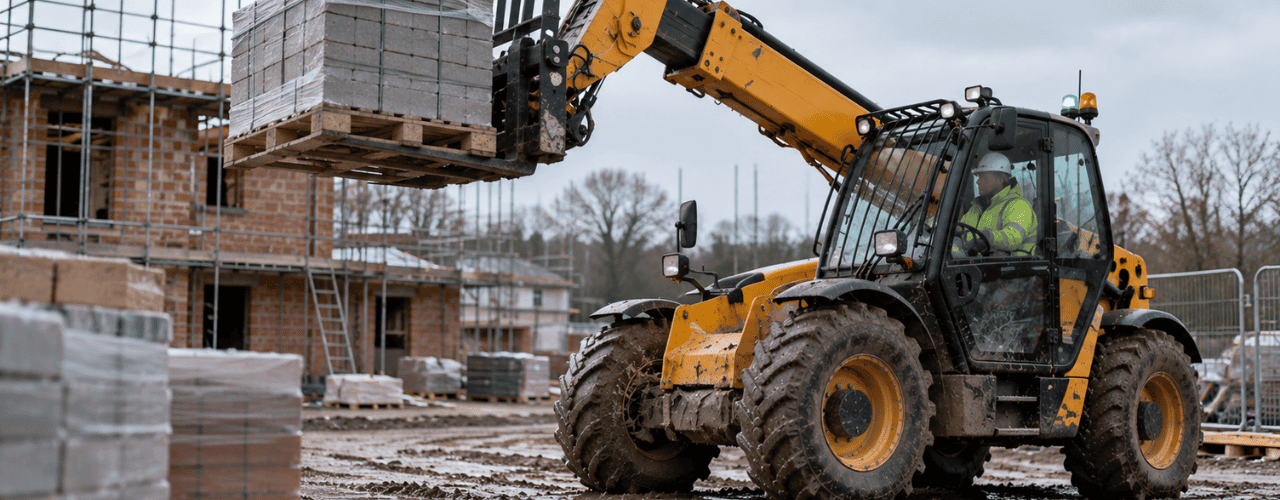
Winter weather does not automatically mean you need a different telehandler. What matters is whether conditions on the site have changed. Softer ground, altered access, reduced working space or different lifting requirements can all affect which machine is suitable.
If the machine was originally discussed during drier conditions, or the project has moved into a different phase, it is worth checking that the original requirements still match the job. The important point is how the site and lifting requirement have changed, rather than the season alone.
For telehandler hire, the specification should be based on the job as it stands now rather than conditions earlier in the project. That means rechecking the practical details before the hire is confirmed.
If conditions on your site have changed since the original requirement was discussed, speak to Glosrose before arranging the next hire. We can review what has changed, help you work through the most suitable telehandler options for the job, and provide the equipment through our hire service. This gives you practical advice and equipment support from the same experienced team.
Yes, if winter has materially changed the site or lifting requirement. A telehandler specification should reflect the job and the site it will work on. If those conditions are still much the same, the requirement may not change simply because the weather is colder or wetter.
If the site has moved on, the requirement may need another look. Ground can soften, temporary routes can change, new structures can reduce manoeuvring space, and the materials being handled may be different from those discussed at the start of the project.
Potentially, but suitability depends on the condition of the ground, the route the machine will use and the lifting requirement. Wet weather can leave travel routes and working areas softer or less stable than when the site was first assessed. Slopes, disturbed ground and areas that have become unstable all need to be considered when deciding where the telehandler will travel and operate.
This does not mean that wet ground automatically calls for a larger machine or a rough-terrain model. HSE guidance on telehandlers stresses the importance of selecting equipment for the job and site, and notes that sloping, uneven or unstable ground can create hazards. It also makes clear that rough-terrain lift trucks still have operating limits.
For a hire enquiry, the practical step is to describe the ground as it is now. With that in mind, tell us about known slopes, soft areas and material changes to the route or working area. Those details can affect which options are worth considering and prevent the discussion being based on conditions that no longer exist.
Yes. Changes to site access and available working space can affect which telehandler is practical for the job. A route that worked earlier in the project may not work in exactly the same way several months later. Temporary roadways can deteriorate, stored materials can narrow an approach, and new parts of the build can reduce the space available for turning or positioning the machine.
Access details are particularly useful when they have changed since a previous hire. Gate widths, slopes, restricted approaches and the space available at the workface can all affect the choice of machine. If you already have measurements, share them. If not, explain the restriction as clearly as you can so it can be considered before delivery. If restricted access is already one of the main challenges on the project, our guide to specifying telehandler hire for tight sites looks at those measurements in more detail.
Visibility may change too. Shorter daylight hours, fog or heavy rain can alter the working environment even when the physical route remains the same. Site management remains responsible for site-specific safety planning, but changed visibility is still useful information when the machine requirement is being discussed.
They can, particularly as a project moves into a different phase. Different materials may be arriving on site, the final placement point may be higher or further away, or the machine may be working from a different position because the build has progressed.
Reconfirm the load rather than relying on the original enquiry. Approximate weight and dimensions, required lift height, outreach and final placement position all help build a clearer picture of the job. If an attachment is needed, that should also be raised because attachments can affect how a machine is specified for a task.
Ground conditions therefore cannot be considered in isolation. The machine still has to match the load and the lift, as well as the site it needs to move around.
You need enough current information to describe the load, lift and site conditions, but you do not need to identify the exact telehandler yourself. Give us an accurate picture of the job and the current site so we can discuss suitable hire options. Useful information includes:
The more accurate this information is, the easier it is to rule out unsuitable options early. You do not need to identify the exact telehandler before making an enquiry. The aim is to give us enough current information to start the specification discussion on the right basis.
If the job and site are substantially unchanged, the previous specification may still be suitable. If the ground, access, load, lift height or working space has changed, tell us before arranging the next hire so the requirement can be reviewed.
We can review the updated requirement with you and discuss options that fit the current job. The same specification may still be suitable, but it is better to check against the current site and lifting requirement than to assume nothing has changed.
If winter has changed the ground, access or lifting requirements on your site, discuss those changes with us before arranging the next hire. At Glosrose we provide short-term telehandler hire from one week and supports hire customers across Kent, Surrey, Sussex and Greater London, subject to availability. Tell us what the machine needs to lift, where it will work and what has changed, and we can discuss suitable options for the current job and hire period. Speak to our team about your requirements.
Not sure what you are looking for or need some advice for your requirements? Get in touch with us today and a member of our experienced team will be more than happy to help answer your questions.