How to expand a forklift fleet without losing cost control
Blog
Growth in warehousing, manufacturing and logistics can create a simple problem: you need more lifting...
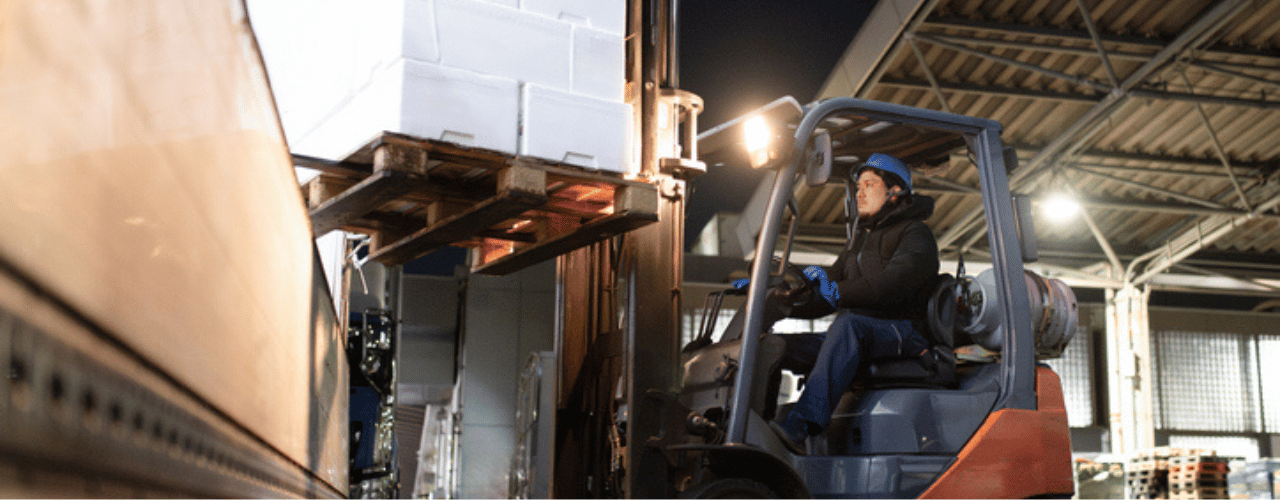
A 5-tonne load does not automatically mean a 6-tonne forklift is suitable. Bobcat lists the D60S-9 at 6,000 kg capacity with a 600 mm load centre. The right truck still depends on the load centre, lift height, mast and fork configuration, any attachments and the conditions in which the forklift will work.
That distinction matters when you are regularly handling loads around 5 tonnes or more. Choosing by nominal capacity alone can leave too little usable capacity for the actual lift, while moving unnecessarily to a much larger truck can add size and cost without solving the real specification issue.
Bobcat’s current 6–9-tonne diesel 9-Series gives you four capacity classes to consider: the 6-tonne D60S-9, 7-tonne D70S-9, 8-tonne D80S-9 and 9-tonne D90S-9. All four are listed with a 600 mm load centre.
At Glosrose, we start with the application rather than simply moving up to the next capacity class. Tell us what you are lifting, where the truck will work and how intensively it will be used, and we can help narrow the Bobcat fork lift specification around the job.
Potentially, but the load weight alone cannot answer the question.
Bobcat rates the D60S-9 at 6,000 kg with a 600 mm load centre. If the load centre exceeds 600 mm, the required lift height increases or an attachment changes the truck configuration, check the applicable rated capacity for that setup rather than relying on the 6-tonne headline figure.
Two loads can weigh the same while placing different demands on a forklift because their dimensions and centres of gravity differ. The weight of the load, its centre of gravity and the safe limits of the equipment all need to be understood when planning lifting work.
The most useful information to bring into that specification conversation is:
The key question is therefore not simply “Is 6 tonnes more than 5 tonnes?” It is whether the forklift provides sufficient rated capacity for the load and configuration you will actually use. You do not need to work through that decision in isolation. If you can tell us the load weight and dimensions, where it needs to be placed and what forks or attachments are required, we can help relate those requirements to the applicable Bobcat capacity and configuration.
Capacity is only one part of the specification. Site conditions do not automatically mean you need a higher-capacity forklift, but they can change the configuration. Tell us about the surfaces, gradients, access and travel routes the truck needs to handle, and we can factor those requirements into the Bobcat specification.
Uneven yards, ramps and changing surfaces can affect tyre choice, traction and how the truck is used. Bobcat publishes tyre, ground clearance and gradeability information for its 6–9-tonne 9-Series, so these details can be checked against the conditions on your site.
Travel routes and manoeuvring space matter too. Models across the range differ in dimensions and performance as well as rated capacity, so turning requirements and available access should be considered alongside the load.
If the forklift needs to move between buildings and yards, work on ramps or travel longer distances, include that in the brief. We consider site layout, access, handling pattern and operating environment as part of the equipment-selection conversation.
A forklift handling heavy loads repeatedly through a shift has a different duty from one moving the same weight occasionally. That working pattern should be part of the specification conversation from the start.
Duty cycle means how frequently and intensively the machine works. Operating hours, travel distance and the frequency of heavy lifts should be considered alongside rated capacity.
If the truck will be working long hours or handling repeated heavy lifts, tell us that at the specification stage. We can consider the working pattern alongside the machine choice and discuss the servicing and maintenance support the operation may need.
For higher-utilisation duties, Bobcat advertises 1,000-hour service intervals for the 6–9-tonne 9-Series, alongside quick maintenance access including a compartment that tilts to 60 degrees.
If you need a Bobcat fork lift for 5-tonne-plus loads, the current 6–9-tonne diesel 9-Series comprises four models:
Those four capacity classes give us room to match the truck more closely to the job rather than jumping from a 6-tonne machine straight to the largest model in the range.
If the D60S-9 provides sufficient capacity for the actual load, lift height and configuration, there may be no reason to move higher. If it does not, we can consider the D70S-9, D80S-9 or D90S-9 against the same load and site requirements.
Across the range, Bobcat highlights features including diesel engines with Bosch common-rail fuel systems, an electronically controlled three-speed transmission, automatic DPF regeneration, a rear camera, anti-surge function, electronic parking brake, diagnostic functions and service-access features. Bobcat also positions the range around fuel efficiency, operator comfort and heavy-load handling.
These features matter, but the load and application should determine the specification first.
You tell us what you are lifting, how high it needs to go, where the forklift will work and how intensively it will be used. We can then help narrow the appropriate Bobcat model, mast, fork or attachment configuration and ongoing support requirements.
That reflects the way we approach Bobcat equipment selection. We start with the job rather than a model number, then consider the site, loads, access restrictions and expected workload before helping identify a suitable machine and specification.
Across our wider materials handling offer, we are not tied to one manufacturer.
For customers considering a Bobcat fork lift, the same application-first approach means matching the available equipment to the job rather than simply starting with the largest forklift in the range.
We can also discuss servicing, repairs and parts support alongside the machine itself, so ongoing support is considered as part of the purchasing decision rather than after the forklift arrives. If hire is the better commercial route, we can also discuss Bobcat fork lift hire options where suitable, subject to availability.
You do not need to arrive with a finished specification. The most useful starting information is:
This helps establish the load centre and the capacity the truck needs to provide.
These affect the configuration and the applicable capacity that needs to be checked.
Tell us about surfaces, gradients, access, turning space and the routes the truck will use.
Operating hours and the frequency of heavy lifts help define how intensively the truck will work.
With that information, we can compare the requirement against the D60S-9, D70S-9, D80S-9 and D90S-9 and help narrow the appropriate capacity class and configuration.
The aim is not to start with the highest-capacity truck in the range. It is to identify sufficient capacity for the actual lift while making sure the machine still suits the site, workload and ongoing support requirements.
For loads around 5 tonnes or more, the right starting point is the actual load and its centre of gravity, not an assumption that a 6-tonne forklift will automatically be suitable.
Bobcat’s 6–9-tonne diesel 9-Series gives us four capacity classes to consider: 6, 7, 8 and 9 tonnes. Lift height, mast and attachment requirements, site conditions and working pattern then help narrow the appropriate model and configuration.
If you are planning to handle regular 5-tonne-plus loads, tell us what you are lifting, where the machine will work and how it will be used. We can help identify a suitable Bobcat fork lift for the job and discuss the servicing and support the operation may need.
Not sure what you are looking for or need some advice for your requirements? Get in touch with us today and a member of our experienced team will be more than happy to help answer your questions.