Why Long Loads Need More Than Forklift Capacity Alone
Blog
Long loads such as timber packs, steel sections and pipes require more than adequate forklift...
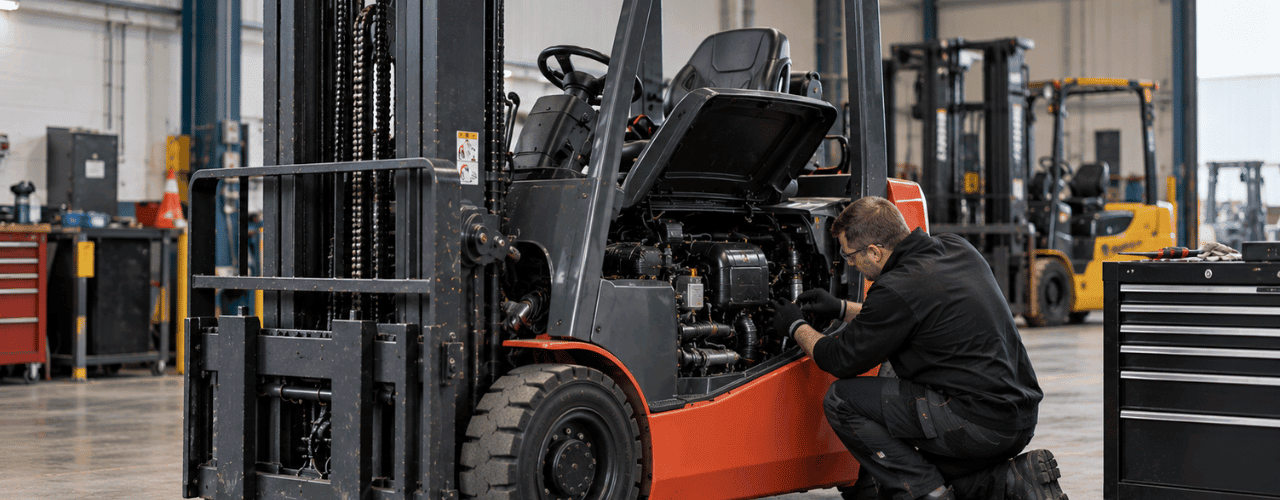
A forklift does not have to stop working before maintenance matters. Components can wear, fluid condition can change and faults can begin developing while the truck is still completing its normal shifts. If attention only starts once a problem becomes obvious, the timing of maintenance is being dictated by the fault rather than by a plan.
That is why waiting for a breakdown makes maintenance reactive: the fault decides when attention is needed. Planned servicing gives fleet managers more control over maintenance timing and creates opportunities to identify deterioration before it causes a larger operational problem.
If your forklift servicing is still being triggered mainly by faults, we can help move it onto a more planned footing. At Glosrose we support routine servicing, repairs, maintenance contracts and fleet management for individual trucks and larger fleets.
Maintenance becomes reactive when work starts only after a fault affects the truck. At that point the business has less control over when engineering attention is needed, and the immediate priority is usually to restore the equipment rather than fit the work neatly around the operating schedule.
An obvious fault is also not the only sign that attention may be needed. Wear and deterioration can develop gradually. In practice, this means a truck may remain operational even though components may already need attention or be approaching a maintenance requirement. A planned routine gives the business opportunities to identify those issues during scheduled attention rather than relying only on a breakdown to reveal them.
Reactive repair. Starts after a fault or defect affects the truck. The timing is usually dictated by the problem, so the immediate priority is restoring the equipment and limiting disruption.
Planned forklift servicing. Starts from a maintenance schedule based on the equipment, manufacturer guidance and how the truck is used. It creates regular opportunities to identify wear or deterioration before a breakdown is the first sign that attention is needed.
For that reason, planned servicing does not eliminate the need for reactive repairs. They may still be necessary from time to time, but planned servicing reduces the extent to which maintenance depends entirely on something going wrong first.
Planned forklift servicing can bring developing wear, damage or deterioration to attention during scheduled maintenance. What needs to be checked will depend on the truck, manufacturer guidance and the work it performs, but routine servicing may include attention to areas such as:
The purpose is not to predict every future failure. It is to create regular opportunities to identify maintenance needs before a breakdown is what brings them to attention. Where deterioration is identified early enough, it may be possible to discuss and schedule remedial work before the issue becomes more disruptive.
There is no single servicing interval that is right for every forklift. The maintenance schedule should follow the manufacturer or authorised supplier’s instructions and reflect factors such as equipment type, usage levels and operating conditions.
In practice, a truck working intensively may need a different maintenance approach from equipment used less frequently, and site conditions can also influence what attention is appropriate. The important point is not to impose an arbitrary interval across the fleet, but to build planned forklift servicing around the equipment actually in use.
You do not need to calculate that schedule yourself. An experienced forklift service provider can review the equipment, existing service history and operating pattern, then help organise maintenance in line with the relevant guidance.
Planned forklift servicing can help reduce unplanned downtime by giving maintenance a place in the operating schedule instead of leaving every intervention to an unexpected fault. It cannot remove all breakdown risk, but it can make maintenance activity more visible and easier to plan.
The Health and Safety Executive (HSE), the UK regulator for workplace health and safety, advises that planned preventive maintenance can help prevent failures during use. In practice, the aim is to reduce avoidable disruption by identifying developing issues where possible, rather than suggesting that servicing can guarantee zero downtime or eliminate breakdowns.
Forklift servicing, repair and Thorough Examination are connected to equipment condition, but they serve different purposes. For that reason, treating them as interchangeable can leave gaps in maintenance planning.
Servicing is planned maintenance carried out in line with the equipment’s maintenance requirements. It can include routine inspection, lubrication, adjustment and replacement of worn or service items where required.
Repair is remedial work carried out after a fault, defect or damaged component has been identified. It may follow a breakdown, an operator report or an issue found during servicing or inspection.
A Thorough Examination is a separate statutory examination of the relevant lifting and safety-related parts, carried out by a competent person at the required intervals or in accordance with an examination scheme. It is not replaced by normal servicing, and completing a service does not remove the need for a Thorough Examination where one is required.
For fleet managers, this means routine maintenance, repairs and statutory examination need to be planned as distinct activities, even when the same service partner may support more than one of them.
A forklift service provider can help with servicing schedules and maintenance coordination, reducing the amount fleet managers need to organise internally. At Glosrose, we can support routine servicing, emergency repair, maintenance contracts, fleet management and mobile engineer attendance around the equipment you operate and how it is used.
Depending on the requirement, that support can also include vehicle telematics and bespoke reporting, Thorough Examination and parts support. This gives businesses one route into planned maintenance and remedial support without turning fleet managers into service technicians.
For that reason, the useful starting point is the fleet itself: the equipment in operation, how heavily it is used, where it works and what servicing history already exists. From there, the maintenance approach can be discussed around the actual equipment and operating pattern rather than a generic service interval.
In practice, the shift starts by treating servicing as part of fleet planning rather than waiting for a fault to create the next maintenance job. Planned forklift servicing gives the business more visibility over when routine attention is due and creates opportunities to identify deterioration before it develops into a larger operational issue.
Tell us what trucks you operate, how they are used and how servicing is currently managed, and we can discuss a more planned maintenance approach for your fleet. Speak to our team about your servicing requirements.
Not sure what you are looking for or need some advice for your requirements? Get in touch with us today and a member of our experienced team will be more than happy to help answer your questions.